
Integrations & automation
Integrations & automation
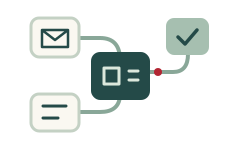
Make recurring data movement repeatable and easier to validate. Automation is designed around a defined trigger, validated data and visible exceptions so that important decisions do not disappear into a script.

When this service is useful
Typical problems
What the work can include
The final proposal is based on evidence and access, so the work remains relevant to the real environment rather than a generic package.
Delivery and verification
Mesh Creation keeps scope, approval, verification and the recovery path visible throughout delivery.
Define ownership and expected outcomes before automating the current process.
Compare source and output counts, totals and rejected records before authorising routine execution.
Authorise live execution only after results can be verified and repeated safely.
Scope boundaries
Access, dependencies, environments, acceptance, handover and ongoing responsibility are made explicit. Assumptions are recorded rather than hidden inside delivery.
Frequently asked questions
Make recurring data movement repeatable and easier to validate. It is a suitable starting point when the current state, intended outcome and people responsible for acceptance can be reviewed together.
A repeatable import or export process with schema validation, duplicate rules and an exception report. The confirmed proposal then sets out the work, dependencies, acceptance checks and handover that apply to this service.
Define ownership and expected outcomes before automating the current process. Compare source and output counts, totals and rejected records before authorising routine execution.
Scope, access, dependencies, environments, acceptance and ongoing ownership are agreed first. Poor or ambiguous source data is surfaced for decision rather than silently invented or overwritten.
Related services
Integrations & automation
Integrations & automation
Product Engineering

Integrations & automation
Start with the real constraint
Share the product, platform or workflow that needs to be built, modernised or made easier to operate.